Description
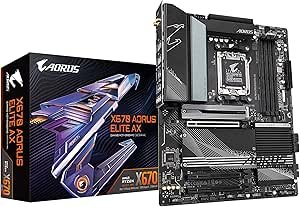
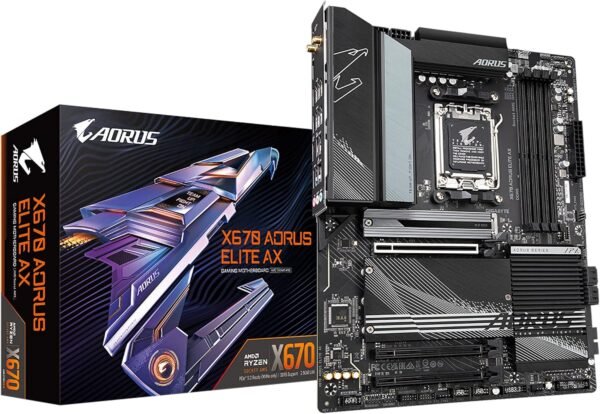
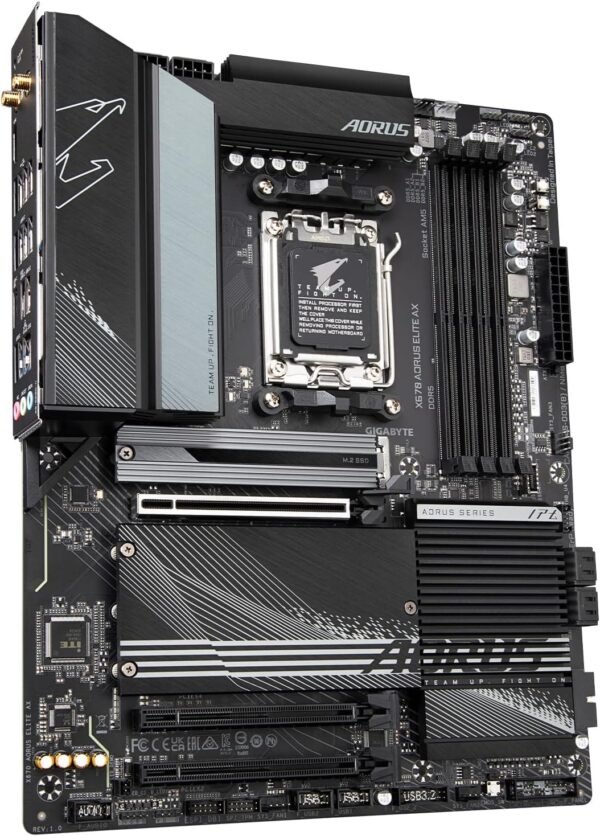
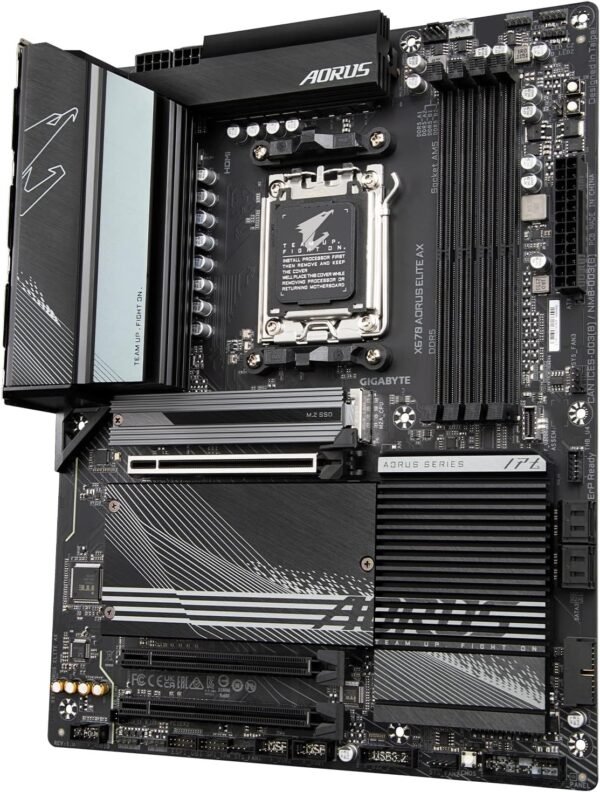
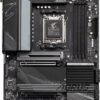
The GIGABYTE X670 AORUS Elite AX is an ATX motherboard on socket AM5, using AMD’s X670 chipset. The listing gives the socket two ways, as AM5 and as LGA 1718, which are the same thing described by AMD’s marketing name and by its physical pin arrangement. GIGABYTE states support for AMD Ryzen 7000 series processors, and the platform is DDR5 only, with no DDR4 option on this socket.
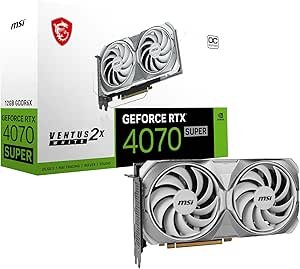
One thing to flag immediately: this product is filed in the graphics cards section of this site rather than in motherboards, and the source listing itself carries rankings in both the motherboard and graphics card categories. It is a motherboard. Readers looking for an actual graphics card should see the MSI RTX 4070 Super, and other boards for the same socket family are covered across the motherboards category.
Socket, Chipset And Processor Support
Compatibility is the first question on any motherboard, so here it is plainly. The socket is AM5, the chipset is X670, and the form factor is ATX. GIGABYTE lists support for AMD Ryzen 7000 series processors on this page and does not name any other generation.
That last point matters. AM5 has since carried later Ryzen generations, but this listing only claims 7000 series support, so anyone planning to fit a newer processor must check GIGABYTE’s own CPU support list for this exact model and confirm the required BIOS version. The good news is that this board makes that easier than most: GIGABYTE lists Q-Flash Plus, which it describes as updating the BIOS without installing a CPU, memory or graphics card. That removes the usual trap where a board needs a firmware update to boot a newer processor but needs a supported processor installed to perform the update. On this board, a USB stick and mains power are enough.
Memory And Storage
Memory is four DDR5 DIMM slots, and GIGABYTE states support for both ECC and non ECC unbuffered modules, which is broader than most consumer boards offer. The specification block lists a memory speed of 6666, presumably in MT/s, which would be an overclocked rating achieved through a memory profile rather than a JEDEC guaranteed speed. Actual attainable speed depends on the processor memory controller and the specific memory kit as much as on the board.
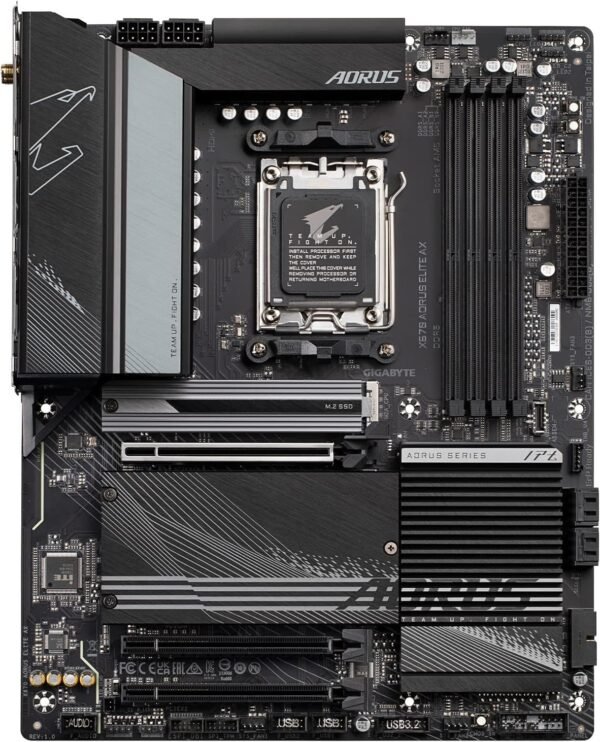
Storage is the strongest part of the specification. GIGABYTE lists quad NVMe M.2 slots, each at x4, which is a lot of drive capacity for a mainstream ATX board and one of the practical reasons to choose X670 over a lesser chipset. Each M.2 connector uses what GIGABYTE calls M.2 EZ-Latch, a quick release screwless retention design, which genuinely helps because the tiny retention screw on a standard M.2 slot is the single most commonly lost part in a PC build. M.2 Thermal Guard heatsinks cover the drives.
Connectivity, Power Design And Extras
PCIe 5.0 is listed for next generation graphics and storage bandwidth. Networking covers 2.5 gigabit Ethernet and AMD Wi-Fi 6E on 802.11ax, with Bluetooth 5.2, which pairs sensibly with a multi gigabit network setup or a device such as the Synology DS923+. USB includes a USB 3.2 Gen 2×2 Type-C port, which is the 20 Gbps standard, plus two USB 2.0 ports per the specification block.
The power design is quoted as a Direct 16 plus 2 plus 2 phase digital VRM on an 8 layer PCB with 2X copper. Phase counts are a rough proxy for how much sustained current the board can deliver to the processor, and a 16 phase arrangement on the core rail is generous for this class. GIGABYTE pairs it with what it calls Advanced Thermal Design and Ultra Durable Armor, neither of which is quantified.
Audio is 8 channel high definition with Audio Noise Guard circuit isolation and high end capacitors, though no codec model is named. Enthusiast features include RGB Fusion with addressable and standard LED strip headers, Smart Fan 6, and a multi function key for reset, RGB switching, direct BIOS entry and safe mode. GIGABYTE states a 5 year warranty, which is longer than the industry norm.
Highlights
- Socket AM5 with the AMD X670 chipset in ATX form factor.
- Four DDR5 DIMM slots supporting ECC and non ECC unbuffered memory.
- Quad NVMe x4 M.2 slots with EZ-Latch screwless retention and thermal guards.
- PCIe 5.0 support and USB 3.2 Gen 2×2 Type-C.
- 2.5 gigabit Ethernet with AMD Wi-Fi 6E and Bluetooth 5.2.
- Direct 16 plus 2 plus 2 phase digital VRM on an 8 layer 2X copper PCB.
- Q-Flash Plus BIOS updating with no CPU, memory or GPU installed.
- Five year warranty stated by GIGABYTE.
Things To Consider
The listing leaves out several specifications a builder needs. There is no rear input and output port list, no SATA port count, no PCIe slot layout showing how the x16 slots are wired, no statement of how many M.2 slots run at PCIe 5.0 versus PCIe 4.0, and no fan header count. On an X670 board those details determine whether a given build works, and they are not here. GIGABYTE publishes them on its own product page and buyers should check there.
The physical dimensions listed as 10.62 by 3.14 by 13.18 inches describe the retail packaging rather than the board, since an ATX motherboard is 12 by 9.6 inches. Weight is given as 4.75 pounds, which likewise includes the box and accessories.
DDR5 only is the other practical consideration. There is no DDR4 fallback on AM5, so existing memory from an older build cannot be carried over. Customer feedback is moderate at 4.2 stars across 650 ratings on a listing first available in September 2022. Builders pairing this board with a processor can compare options in the CPU processors category, including the AMD Ryzen 5 7600X, and should plan cooling with something from the Noctua low profile range or a larger tower cooler.
Who It Suits
The X670 AORUS Elite AX suits a builder assembling a full size AM5 system who wants four M.2 drives, PCIe 5.0, 2.5 gigabit networking and Wi-Fi 6E on the board, and who values Q-Flash Plus for painless BIOS updating. The five year warranty and the generous VRM make it a sensible foundation for a long lived machine.
It is more board than a basic build needs, since a B650 chipset covers most gaming systems for less. It is also the wrong choice for a small case, being ATX, for anyone reusing DDR4 memory, and for buyers who need to confirm exact port and slot layouts before ordering, since this listing does not publish them.