
Description
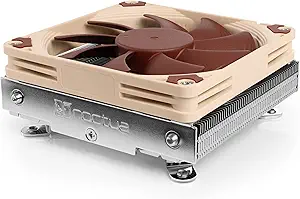
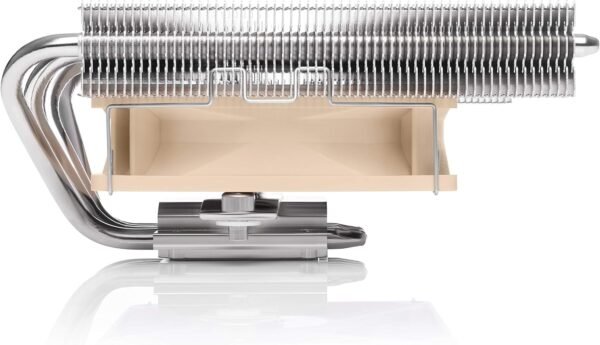
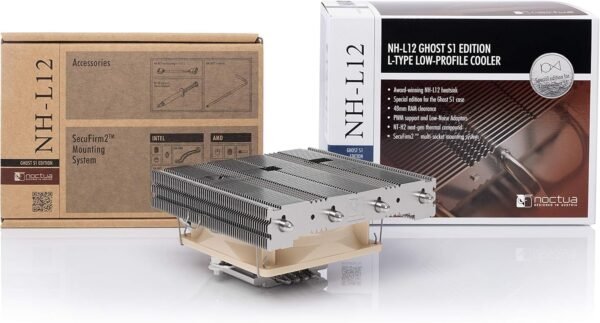
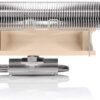
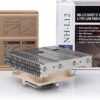
The Noctua NH-L12 Ghost S1 Edition is a low profile air cooler for compact desktop builds. The listing gives its dimensions as 5.04 inches long by 5.9 inches wide by 2.49 inches high, with a single 92mm PWM fan on a 4-pin connector running to a listed maximum of 1600 RPM and a quoted noise level of 17.6 decibels. Construction is copper for the base and heat pipes, aluminum for the cooling fins, with soldered joints and nickel plating. Total weight is listed at 1.1 pounds.
A note on sources before the detail: the product description field on this listing is empty. Everything below comes from the product title and the specification block, and where a compatibility fact is missing, this review says so rather than filling it in.
What the Ghost S1 Edition Is
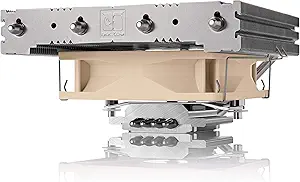
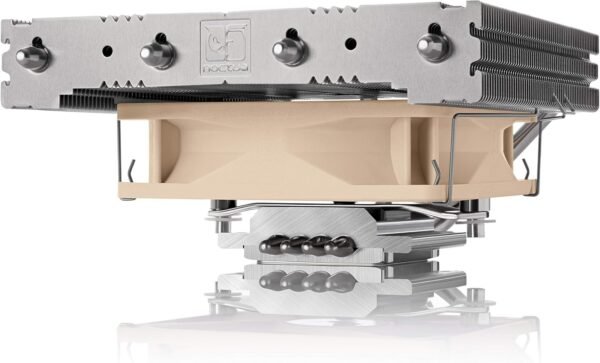
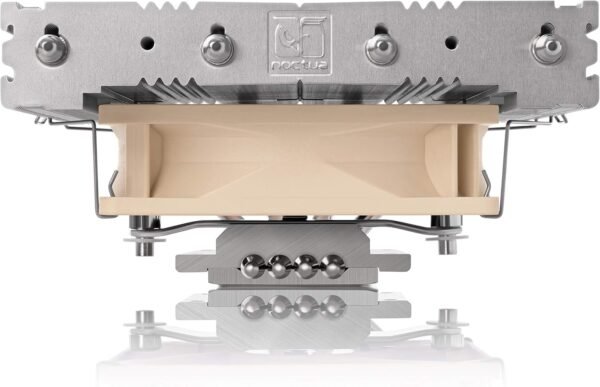
Noctua’s NH-L12 family is a low profile design, meaning the heatsink lies flat over the processor rather than standing up as a tower. That layout exists for one reason: height. In a small case, the distance between the motherboard surface and the side panel is often the binding constraint, and a tower cooler that would fit a mid tower simply will not close the lid on a compact build. The listed 2.49 inch height, roughly 63 millimeters, is the figure to measure against your case’s stated CPU cooler clearance.
The Ghost S1 Edition name refers to a particular small form factor enclosure that this configuration is set up for. In practice that means the cooler ships arranged with a single 92mm fan in the position that suits that case, rather than in the two fan arrangement some NH-L12 configurations use. If you are not building in that specific case, the cooler is still a low profile 92mm design, but the reason for the edition name will not apply to you and you should check the fit against your own case’s clearance figure.
The Fan and the Noise Figure
PWM control
The fan uses a 4-pin PWM connector at 12 volts. That is the specification worth understanding, because it determines how the cooler behaves day to day. A 4-pin PWM fan lets the motherboard vary speed continuously against processor temperature, so the cooler can sit close to silent at idle and ramp only when there is heat to move. A 3-pin fan cannot do this as precisely. Almost every current motherboard provides at least one 4-pin CPU fan header, but it is worth confirming on older or very compact boards.
Reading 17.6 dB
The listed 17.6 decibel figure is a manufacturer measurement taken under defined laboratory conditions, and it is the kind of number that gets misread. It describes the fan at a specific speed at a specific distance in an anechoic environment. It does not describe what your PC will sound like, because your case, the other fans in it, the surface it sits on and the room all contribute. What the number is genuinely useful for is comparison against other coolers quoted the same way. Treat it as a relative figure, not an absolute promise about your desk.
The 1600 RPM maximum is likewise the ceiling rather than the operating point. A 92mm fan at 1600 RPM moves less air than a 120mm or 140mm fan at the same speed, which is the trade that low profile cooling always makes. In return you get a cooler that fits where a tower does not.
Highlights
- Low profile air cooler listed at 5.04 x 5.9 x 2.49 inches, weighing 1.1 pounds.
- Single 92mm PWM fan on a 4-pin, 12 volt connector.
- Listed maximum fan speed of 1600 RPM with a quoted 17.6 dB noise level.
- Copper base and heat pipes for conduction, aluminum fins for dissipation.
- Soldered joints and nickel plating on the heatsink assembly.
- Configured as the Ghost S1 Edition, set up for a specific compact enclosure.
- Listed as an air cooling solution for desktop systems, in Noctua’s brown color scheme.
Things To Consider
The most important omission on this listing is socket support. Nothing in the product title or the specification block names a single supported Intel or AMD socket. That is the first thing a cooler buyer needs to know and it is absent here. Before ordering, check Noctua’s own compatibility list for this model against your exact socket, and confirm whether the mounting hardware in the box covers it or whether a separate kit is required. Sockets change, and a cooler listed since June 2020 predates several current ones.
The second consideration is thermal capacity. The listing quotes no rated wattage, no thermal design power figure and no heat pipe count. A single 92mm fan on a low profile heatsink is a modest cooling arrangement by the standards of current high core count processors, and it is designed for constrained builds rather than for maximum heat removal. If you are pairing it with a processor that draws significant sustained power, look up whether Noctua lists that processor as suitable rather than assuming. A high core count part such as the Intel Core i7-14700 is exactly the case where that check matters.
Third, physical clearance in a small case is never only about height. Low profile coolers overhang the socket area, and a 5.9 inch wide heatsink can sit over the memory slots, the primary M.2 slot or the top PCIe slot depending on board layout. Compact cases such as the darkFlash C275P ITX case and the JONSBO N2 compound this because there is nowhere to move things to. Check memory module height and board layout, not just the case’s cooler clearance number.
Finally, note the color. Noctua’s traditional brown and beige scheme is functional rather than decorative, and in a case with a glass side panel it is visible. That is a matter of taste, but it is worth knowing before the box arrives.
Who Should Buy It, and Who Should Not
Buy the NH-L12 Ghost S1 Edition if you are building in a small case with limited cooler height, you value quiet PWM controlled operation, and you have confirmed that your socket is supported and your processor’s heat output is within what a 92mm low profile cooler handles. Noctua’s construction quality and fan behavior are the reason people choose this class of cooler over the bundled option.
Do not buy it if you have room for a tower cooler, since a taller heatsink with a larger fan will move more heat at lower noise for similar money. Do not buy it for a high power processor under sustained load without checking the compatibility list first. And if your case supports a radiator, liquid cooling such as the TRYX Panorama 360 is a different answer to the same problem. For a simpler Intel focused low profile option, the Noctua NH-L9i is shorter again, and our CPU cooling fans category covers the range.