Description
What The Redragon M711 Cobra Is
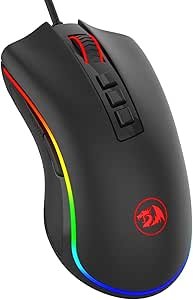
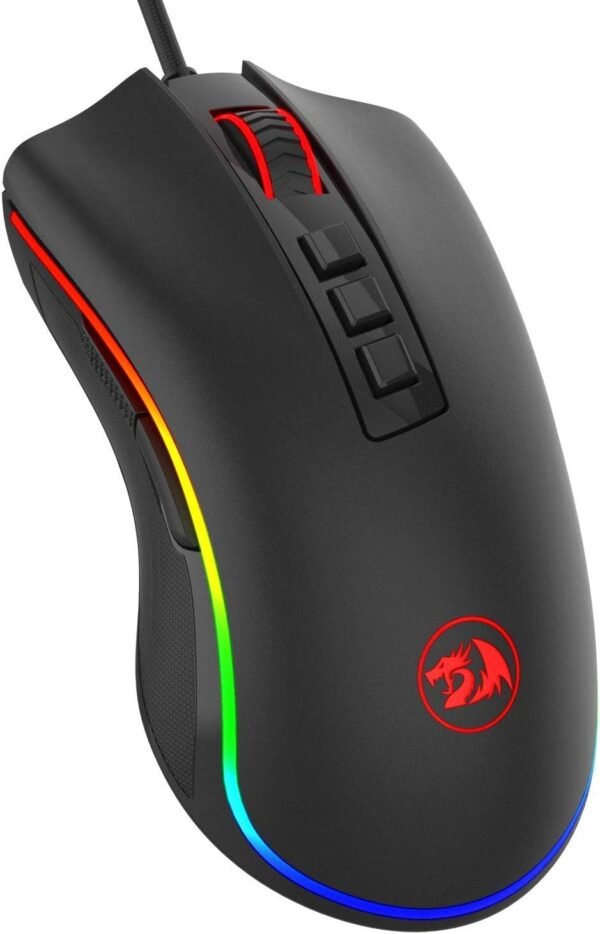
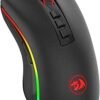
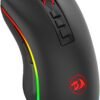
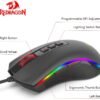
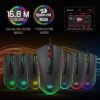
The Redragon M711 Cobra is a wired RGB gaming mouse aimed at the budget end of the market. The specification that gets top billing is a 10000 DPI optical sensor, and the listing supports it with two related numbers: a CPI range of 100 to 10000 when set through Redragon’s programming software, and 500 to 5000 when cycled with the onboard button. The sensor is quoted at a maximum frame rate of 5000 frames per second.
It is a right handed shape with a dual mode scroll wheel, connected by a 1.5 meter USB cable. Wired is the defining choice here: no battery, no charging, no dongle, and no wireless latency question to answer. That places it against wireless gaming options such as the Keychron M3, which solve a different problem at a different price.
Sensor Numbers And What They Mean
The three sensor figures are worth unpacking, because DPI is the most oversold specification in the mouse market. DPI, or CPI, is how far the cursor moves per inch of physical movement. A higher maximum is not better in itself, and most players use a small fraction of a 10000 DPI ceiling. What the range tells you is flexibility: 100 to 10000 through software is a wide adjustment span, and the ability to set a value in software rather than cycling fixed steps is genuinely useful.
The two ranges differ, and the difference is practical. Using the onboard DPI button the mouse steps between 500 and 5000. Reaching values below 500 or above 5000 requires installing the software. The listing does not say how many preset steps the button cycles through or whether the software runs on anything other than Windows, so anyone on macOS or Linux should assume the button presets are what they get.
Lighting And The Wheel
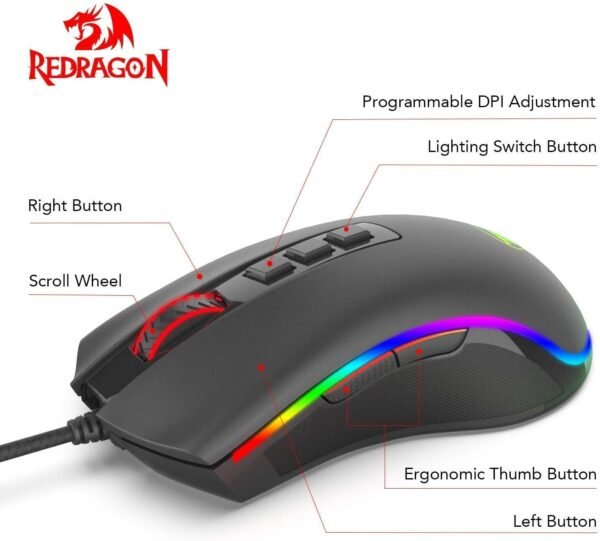
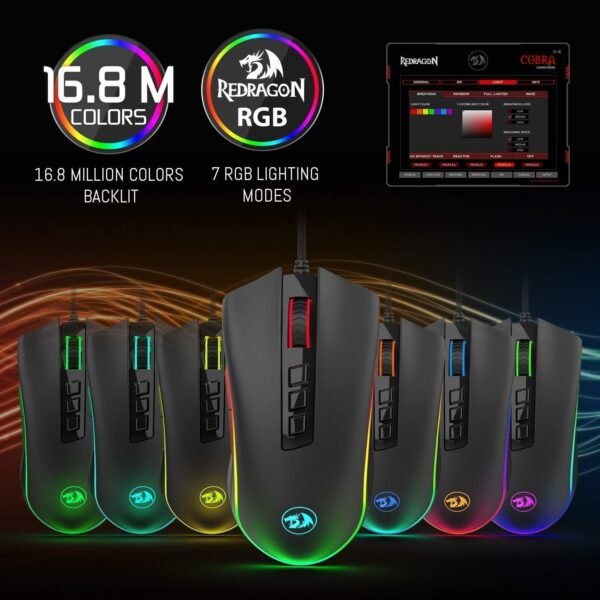
RGB backlighting is fitted and described simply as RGB illuminated, with no zone count or effect list published. The scroll wheel is described as dual mode, though the listing does not explain what the two modes are, so that should be confirmed with the manufacturer. Button count, button assignments and whether side buttons can be remapped are all absent from the listing.
What Is Not Published
For a gaming mouse, this listing leaves out most of what a buyer would want. There is no polling rate, no weight, no usable dimensions, no button count, no sensor model name, no switch rating in clicks and no mention of adjustable weights. Polling rate in particular is a standard gaming mouse specification and its absence is notable.
The compatibility information is also dated. Hardware platform is listed as Windows and Mac, while the operating system field lists Linux, Windows 7 and Windows XP. Windows XP and Windows 7 are both long out of support, and current Windows versions are not named at all. A mouse of this type will almost certainly work as a standard USB device on any modern system, but the configuration software is the part that depends on operating system support, and that is not addressed.
One general point about wired gaming mice is worth making here. A 1.5 meter braided or rubber cable adds drag across a desk, and the usual remedy is a mouse bungee or a cable clip to lift the cord. The listing does not describe the cable material or say whether any cable management is included, so anyone sensitive to cable drag should plan on adding a bungee separately. Cable type is one of the details that separates budget wired mice from more expensive ones.
Highlights
- Wired USB connection with a 1.5 meter cable.
- Optical sensor with a stated 10000 DPI maximum.
- Software adjustable CPI from 100 to 10000.
- Onboard button cycling CPI between 500 and 5000.
- Maximum frame rate quoted at 5000 frames per second.
- RGB backlighting.
- Dual mode scroll wheel.
- No battery to charge and no wireless connection to maintain.
Things To Consider
Before the specific errors, the broad problem with this page is that a gaming mouse is judged on shape, weight and switch feel, and this listing publishes usable data on none of them. Everything below follows from that.
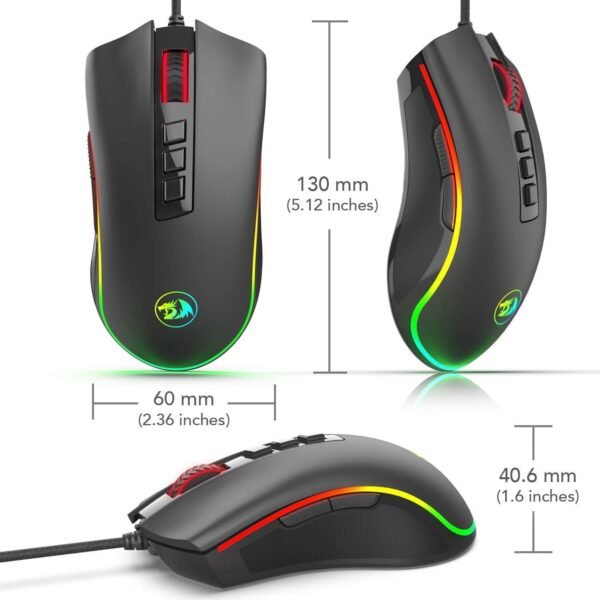
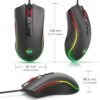
The physical data on this listing is meaningless and should be ignored entirely. Item weight is given as 0.009 ounces and product dimensions as 0.24 by 0.43 by 0.16 inches, figures that would describe something smaller than a coin. Since hand fit is the single most important quality in a mouse, and neither the size nor the weight can be read from this page, buyers should find the real dimensions from Redragon before ordering. The specification table also lists Power Source as Corded Electric and then states that one battery of unknown type is required, on a mouse the same listing describes as wired.
- Dimensions and weight in the listing are unusable, so hand fit cannot be assessed.
- Polling rate is not published.
- Button count and remapping options are not described.
- The sensor model is not named.
- Dual mode wheel is mentioned but never explained.
- Operating system support lists Windows XP and Windows 7 but not current versions.
- Right handed shape only, so left handed users are excluded.
- A battery requirement is listed on a wired mouse.
Who Should Buy It And Who Should Not
The M711 Cobra suits someone who wants a wired gaming mouse with adjustable sensitivity and lighting without spending much. Wired means no battery to manage, the software adjustable CPI range covers most preferences, and the RGB lighting matches a keyboard such as the Redragon K652 from the same brand. As a first gaming mouse or a spare it does the job.
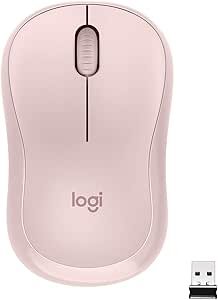
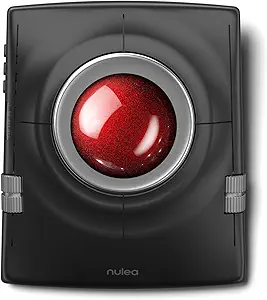
It is the wrong mouse for left handed users, for anyone who needs a published polling rate or sensor specification, and for anyone whose hand size makes fit critical, since this listing publishes no usable dimensions. Buyers who want a quiet office mouse instead should look at the Logitech M220 Silent, those who want an ergonomic alternative should compare the Nulea M512 trackball, and the gaming mice category sits alongside the general mice category for comparison.