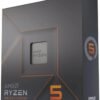
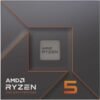

Description
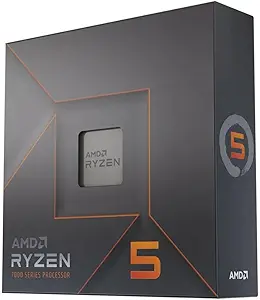
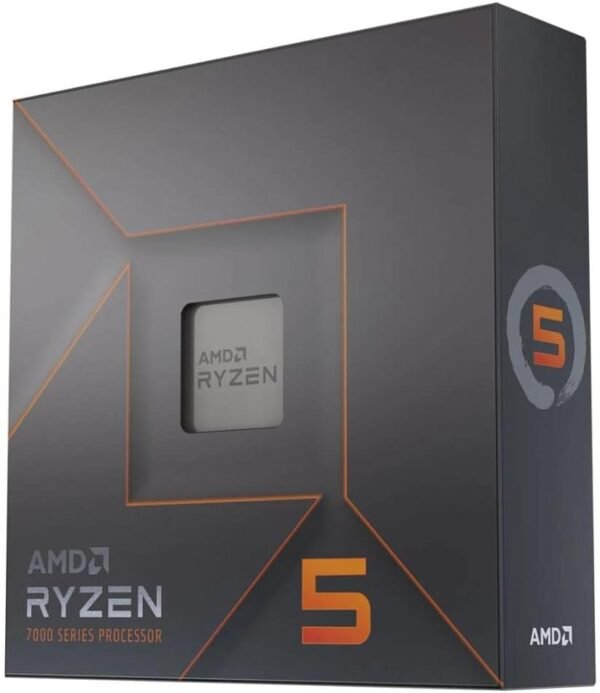
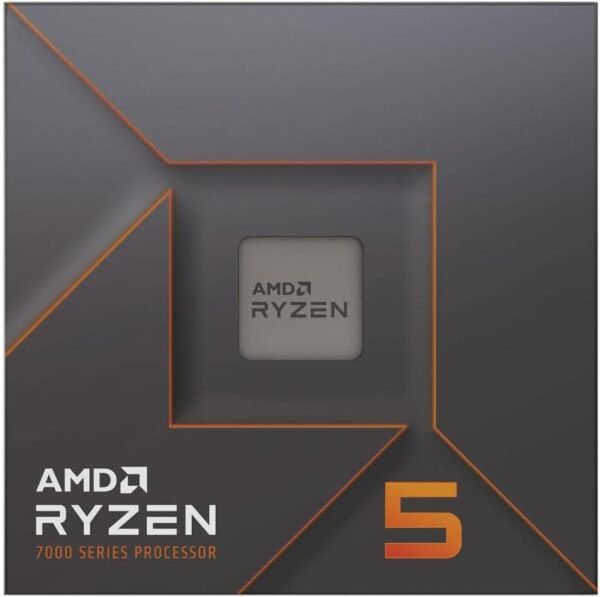
The AMD Ryzen 5 7600X is a six core, twelve thread desktop processor on Socket AM5. AMD lists a 4.70 GHz base frequency with a 5.30 GHz boost, 32 MB of L3 cache and 6 MB of L2, a 5 nanometer manufacturing process, integrated Radeon Graphics and a 105 watt rating. It is an unlocked part, meaning the multiplier can be raised for overclocking. The listing dates to September 2022.
What Six Cores Buys You
Six cores with twelve threads is the mainstream desktop configuration and, for gaming specifically, it remains the sweet spot. Games depend more on how fast a few threads run than on how many threads exist, and a six core part with a high boost frequency and a large cache typically matches processors with far higher core counts in frame rate while costing considerably less.
Where core count starts to matter is elsewhere: video encoding, compilation, rendering, running many virtual machines. Those workloads scale with threads, and a six core part is the entry point rather than the target. If your work is heavily multithreaded, a higher core count part such as the Intel Core i7-14700 with its 20 cores does substantially more per hour, at a different price and on a different platform.
The 4.70 GHz base frequency is notably high and is worth pausing on. Base frequency describes what the processor sustains under load within its power budget, and a 4.70 GHz base means this part does not fall far under sustained work. The 5.30 GHz figure is the boost ceiling on lightly threaded work.
Cache and Process
AMD lists 32 MB of L3 cache and 6 MB of L2. Cache is the fast memory the processor uses to avoid waiting on system RAM, and games are unusually sensitive to it because they access scattered data unpredictably. A larger L3 cache reduces the number of times the processor has to go out to main memory, and that reduction shows up directly in frame rate consistency rather than in average throughput.
The 5 nanometer process reference describes the manufacturing node. Smaller nodes generally allow more transistors in the same area and better performance per watt, though node names across manufacturers are marketing designations rather than strictly comparable measurements. What it means practically here is that this is a current generation part rather than a refresh of an older design.
Platform Requirements
Socket AM5 is the requirement to plan around, and it has consequences beyond the processor itself.
AM5 uses DDR5 memory exclusively. There is no DDR4 option on this platform, so DDR4 you already own cannot be carried over. That is a real cost if you are upgrading from an older AMD system, and it is the single most common surprise for people moving from AM4. A board such as the ASUS ROG Strix X870-A Gaming WiFi or the GIGABYTE X670 AORUS Elite AX is the class of platform this processor sits on.
The integrated Radeon Graphics is worth calling out because AMD’s earlier desktop parts frequently shipped without any. Having integrated graphics means the system will post and display without a graphics card, which makes troubleshooting far easier and lets you build a working machine before the card arrives. It is not intended for gaming.
The listing does not state whether a cooler is included. AMD’s higher tier desktop processors frequently ship without one, and at a 105 watt rating this part needs proper cooling. Budget for a cooler unless the seller confirms one is in the box, and check that the cooler you choose lists AM5 socket support, since AM5 mounting differs from AM4 on some designs. A 360 mm unit such as the TRYX Panorama 360 lists AM5 support explicitly.
Highlights
- 6 cores and 12 threads on Socket AM5.
- 4.70 GHz base frequency with a 5.30 GHz boost ceiling.
- 32 MB of L3 cache and 6 MB of L2 cache.
- Unlocked multiplier, so overclocking is supported on a suitable chipset.
- Built on a 5 nanometer process.
- Integrated AMD Radeon Graphics for display output without a discrete card.
- Listed at 105 watts.
Things To Consider
The 105 watt figure needs context. On AMD’s current desktop parts, the headline wattage is a design rating rather than a maximum draw, and the actual package power under sustained load can exceed it. Size the cooler and the power supply with headroom rather than to the stated number, and expect the processor to run warm under full load, which is normal behavior for this generation rather than a fault.
The unlocked designation is genuine and useful, but it only helps on a chipset that permits overclocking. Entry level AMD chipsets do not, so pairing an unlocked processor with a budget board wastes the capability. If overclocking is your reason for choosing an X part, check the chipset as well.
Two data notes on the specification block. The product dimensions of 1.57 by 1.57 inches are, unusually, roughly correct for an AM5 processor package rather than being packaging data. The color field reading “AMD Ryzen 5 7600X”, the memory type field reading “DIMM” and the number of processors field reading 6, which is the core count, are all import artifacts.
Finally, on total platform cost: the processor is often the smaller part of an AM5 upgrade. A new board and DDR5 memory are required, and that combination frequently costs more than the processor itself. Price the whole platform before deciding, particularly if you are comparing against staying on an older socket for one more cycle.
Who Should Buy It, and Who Should Not
Buy the Ryzen 5 7600X if you are building a new gaming or general purpose desktop, six fast cores match your workload, and you want a current platform with an upgrade path ahead of it rather than behind it. The high base frequency, the large L3 cache and the unlocked multiplier make it a strong gaming processor, and the integrated graphics remove a common build headache.
Do not buy it if your work is heavily multithreaded and would benefit more from a higher core count, if you own DDR4 memory you hoped to reuse, or if you are not prepared to buy a cooler alongside it. For a sense of how far this class of part has moved, the older AMD A10-6800K is instructive. Our CPU processors category covers both AMD and Intel options.