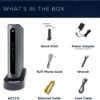
Description
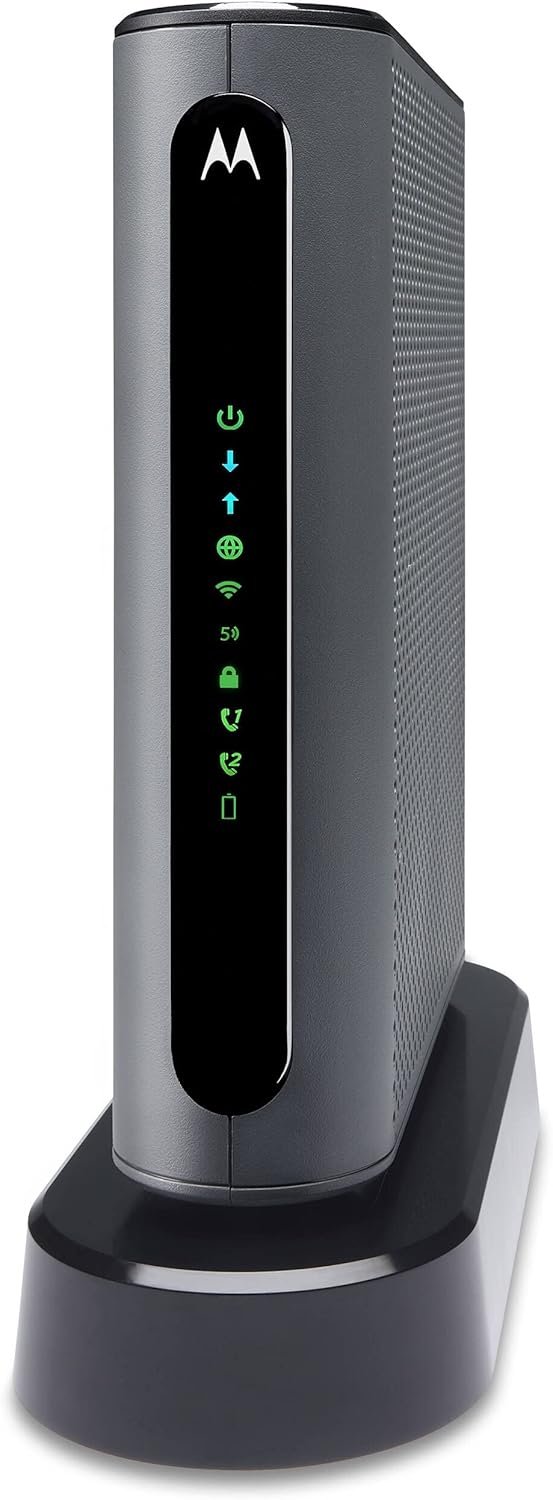
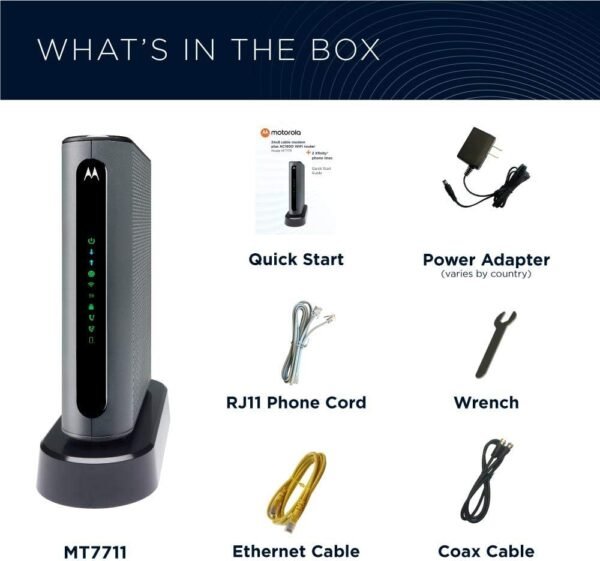
The Motorola MT7711 combines three devices in one chassis: a 24×8 DOCSIS 3.0 cable modem, an AC1900 dual band wireless router, and a telephone adapter with two phone ports for Xfinity Voice service. For a household that pays Comcast for internet and phone service and currently rents equipment, this is the box that replaces the rental.
Buyers comparing cable equipment should note the distinction between an all in one unit like this and a modem only device such as the Hitron CODA56, which requires a separate router. Another combination unit is the NETGEAR Nighthawk C7000, and standalone routers include the ASUS RT-AX1800S.
The Provider Restriction Comes First
Motorola states clearly that the device can be used without telephone service but is only compatible with Xfinity, meaning Comcast, internet service. That is not a soft recommendation and it should be the first thing a buyer checks.
The telephone functionality is the reason for the restriction. Voice over cable requires provisioning by the provider, and Motorola built this unit specifically against Comcast’s Xfinity Voice implementation. Motorola also notes that disconnecting the phone option requires contacting Motorola Network Support, which is an unusual requirement and suggests the voice function is not simply switched off in the web interface.
Anyone on Spectrum, Cox, or any other cable provider should look at a different device. Anyone on fiber, DSL or satellite cannot use a cable modem of any kind.
Modem And Router Specifications
The modem is DOCSIS 3.0 in a 24×8 channel configuration, meaning 24 downstream and 8 upstream bonded channels. That is the top tier of DOCSIS 3.0 and it was a strong specification when the product launched in 2018. It is now a generation behind DOCSIS 3.1, which uses OFDM channels for substantially higher speeds and lower latency. A household on a modern multi gigabit cable plan will not get full speed from a DOCSIS 3.0 modem regardless of the router attached to it.
The router side is AC1900 dual band, which is Wi-Fi 5 rather than Wi-Fi 6. Motorola lists three internal antennas supporting three send and three receive channels, which is a 3×3 configuration and better than the 2×2 arrangement common in cheaper routers. AnyBeam beamforming operates on both 2.4 GHz and 5 GHz, focusing the signal toward connected devices rather than broadcasting evenly in all directions, which improves range and reliability in practice. Motorola also lists what it calls Wireless Power Boost, described as amplifiers that increase signal strength.
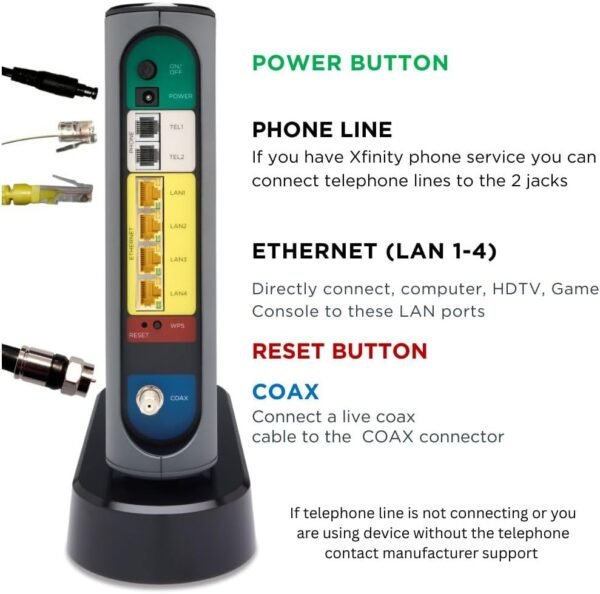
Four gigabit Ethernet ports handle wired devices. There is no multi gigabit port, so the wired side is capped at one gigabit as well. Motorola states the unit supports shared internet for up to 253 wireless and Ethernet devices, which is the practical limit of a standard private network address range rather than a meaningful performance figure.
Telephone Features And Management
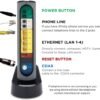
Two telephone ports support Xfinity Voice, and Motorola lists enhanced call features including caller ID, call forwarding and conference calling. Two ports means two separate lines or two handsets, depending on how the service is provisioned. For anyone still using a landline through their cable provider, integrating it into the same box removes a separate rented adapter.
A guest network gives visitors internet access while keeping them separated from devices on the private network, which is a basic security feature and one worth using. Motorola lists technical support by telephone, online chat and email.
One further practical point about installation. Replacing a provider supplied device with a purchased one requires the modem’s MAC address to be registered with the provider before service works, which is usually a short call or a self service activation on the provider’s website. Where a telephone line is involved that process is more involved than for internet alone, because the voice service has to be provisioned onto the new hardware and the existing line ported across. Anyone switching should expect the phone line to be down briefly during the changeover and should not do it on a day the line is needed.
Highlights
- 24×8 DOCSIS 3.0 cable modem.
- AC1900 dual band Wi-Fi router with a 3×3 antenna configuration.
- Four gigabit Ethernet ports.
- Two telephone ports for Xfinity Voice.
- AnyBeam beamforming on 2.4 GHz and 5 GHz.
- Guest network support.
- Caller ID, call forwarding and conference calling on the voice service.
- Replaces a rented modem, router and telephone adapter in one unit.
Things To Consider
Age is the central issue with this product. Motorola first listed it in August 2018, and both of its core technologies have moved on since: DOCSIS 3.1 has replaced 3.0 as the standard for high speed cable plans, and Wi-Fi 6 has replaced Wi-Fi 5. Neither makes the device useless, and for a household on a mid tier Xfinity plan with ordinary wireless devices it will work perfectly well, but a buyer paying for a fast plan today is capping their service with this hardware.
The customer feedback reflects a mixed record: 4.0 stars across 6,030 ratings. That is a very large sample and a middling average. Combination modem router units generally rate lower than separate devices, partly because a single failure takes out the whole network and partly because provisioning problems with cable providers get blamed on the hardware. Buyers should read the recent reviews specifically, since firmware and provider compatibility change over time.
The all in one design has a structural drawback worth naming. When the modem, the router and the telephone adapter are one device, a fault in any of them means replacing all three, and an upgrade to newer Wi-Fi means replacing the modem too. Separate devices cost more initially and age better.
Physically the unit is 8.25 by 2.25 by 9 inches and weighs 3.78 pounds. The manufacturer field reads MTRLC LLC, which is the company that produces Motorola branded networking hardware under license. Readers can compare alternatives in the modems category and the routers category.
Who It Suits
The MT7711 suits an Xfinity customer who takes both internet and telephone service from Comcast, currently rents equipment, and wants to replace all of it with one purchase. On a mid tier plan with a normal number of wireless devices it does everything asked of it, and the two phone ports are a feature almost no other retail device provides.
It is the wrong purchase for customers of any other provider, for anyone on a high speed plan that would benefit from DOCSIS 3.1, for households wanting Wi-Fi 6, and for buyers who prefer separate modem and router devices so each can be upgraded independently.