
Description
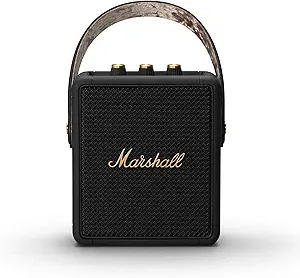
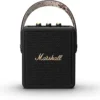
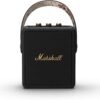
The Marshall Stockwell II is a portable Bluetooth speaker built around a distinctive multi directional driver arrangement and the guitar amplifier styling the Marshall name carries. Marshall quotes more than 20 hours of playtime from a 2.6 pound body, with three class D amplifiers driving a subwoofer and both front and rear facing tweeters.
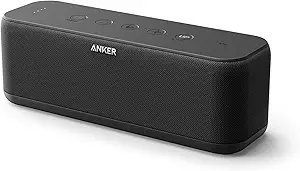
That driver layout is the technical argument for the product. Buyers comparing portable speakers should look at the Bose SoundLink Revolve II for another 360 degree design, the Anker Soundcore Boost for a documented specification sheet, or the JBL Charge 5.
The Water Rating Needs Correcting
This listing states the water resistance in three places and two of them are wrong, so it needs stating plainly before anything else.
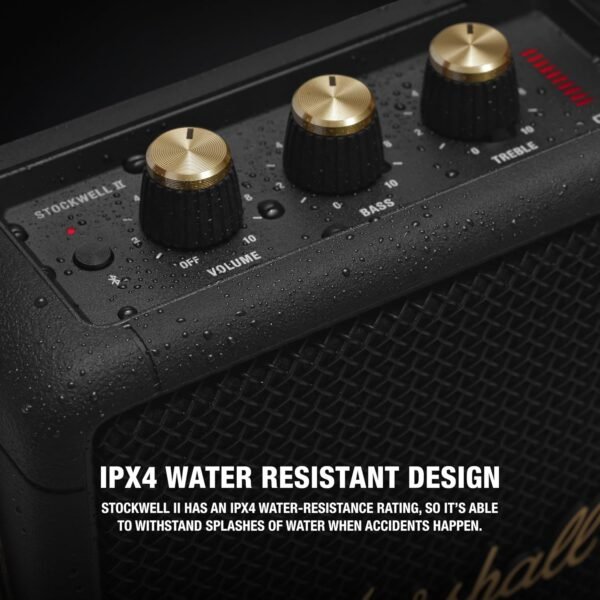
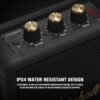
Marshall’s own description and feature bullet both give the rating as IPX4, described as able to withstand splashes of water when accidents happen. IPX4 means protection against splashing water from any direction. It does not mean submersion, it does not mean the speaker survives being dropped in a pool, and it does not mean the speaker can be rinsed under a tap.
The specification fields on the same listing read Is Waterproof: True and Water Resistance Level: Waterproof. Both are incorrect for an IPX4 device. A buyer who takes those fields at face value and treats this speaker as waterproof will destroy it. The IPX4 rating in Marshall’s own text is the accurate figure. Anyone who genuinely needs a speaker that survives water should look at an IPX7 rated model instead.
Drivers, Amplifiers And True Stereophonic
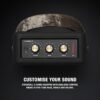
Marshall specifies three class D amplifiers driving a subwoofer plus front and rear facing tweeters. Placing tweeters on both the front and the back is what produces the multi directional effect Marshall calls True Stereophonic, described as 360 degree sound where every spot is a sweet spot.
The physics is straightforward: a conventional speaker projects forward, so listeners behind it hear a duller sound. Firing tweeters in both directions spreads the high frequencies more evenly around the speaker, which suits a speaker placed in the middle of a group rather than at one end of a room. It is not the same as true stereo separation, since a single small enclosure cannot produce a wide stereo image, but it does even out the coverage.
The subwoofer diameter is listed as 2.76 inches, given elsewhere as 6.99 centimeters, which are the same figure in different units. No power output in watts appears anywhere on the listing, and no frequency response range is published, so the speaker cannot be compared numerically against competitors.
Battery, Charging And Build
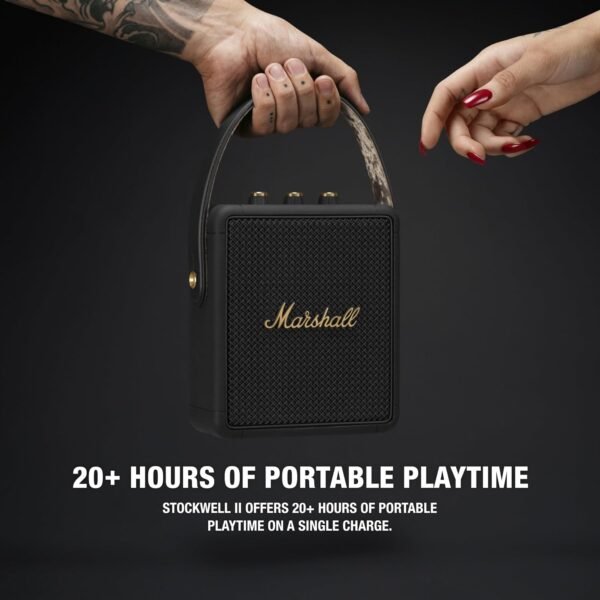
Marshall quotes more than 20 hours of playtime on a single charge, with a quick charge feature giving about 6 hours of playtime from 20 minutes on the cable. That quick charge figure is genuinely useful: a speaker that recovers most of an evening’s use in the time it takes to pack a bag is more practical than one that needs planning. Full charge time is listed at 5 hours. Charging is over USB-C, and a USB-C cable is included alongside a quick start guide and safety documentation.
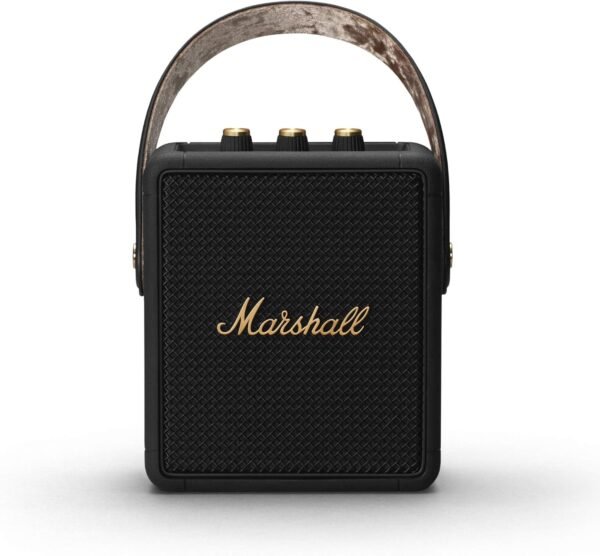
The construction is the other half of the appeal. A steel metal grille echoes the mesh found on classic microphones, the exterior is silicone for grip and impact resistance, and a guitar inspired carry strap is fitted. At 2.6 pounds and 7.1 by 6.3 by 2.8 inches, it is a speaker carried by a strap rather than slipped into a pocket.
Bluetooth is version 5.0 with a stated range of 30 feet, which the specification block converts to 9.14 meters. A separate Maximum Range field reads 10 meters, which is the same figure rounded.
Highlights
- Three class D amplifiers driving a subwoofer plus front and rear tweeters.
- True Stereophonic multi directional sound.
- More than 20 hours of playtime per Marshall.
- 20 minute quick charge for around 6 hours of playback.
- Bluetooth 5.0 with a 30 foot stated range.
- Steel grille, silicone exterior and a guitar style carry strap.
- IPX4 splash resistance.
- USB-C charging with the cable included.
Things To Consider
Beyond the water rating errors, the specification block contains several other faults. Number of Batteries reads one AAA battery required and included, on a speaker with a built in rechargeable pack. Battery Capacity reads 20 Hours, which is a duration in a field expecting a capacity in milliamp hours. Surround Sound Channel Configuration reads 5, which does not describe this speaker. Control Method reads Touch while Controller Type correctly reads Button. The Language field reads English four times over. The manufacturer is listed as Zound Industries, which is accurate: Zound builds Marshall branded audio products under license.
The absence of any power rating or frequency response is the substantive gap. Marshall describes the sound as brilliantly powerful and clear, which is an adjective rather than a measurement, and a buyer comparing this against a competitor that publishes wattage and frequency range has nothing to compare against.
There is also no mention of stereo pairing with a second unit, which several competitors offer, and no aux input is listed among the connections, so Bluetooth appears to be the only input.
Customer feedback is good and well sampled at 4.5 stars across 2,602 ratings, on a speaker first available in May 2020. That is the most reliable figure available and it counts for more than the muddled specification block. Readers can compare alternatives in the portable Bluetooth speakers category or look at desk options in the computer speakers category.
Who It Suits
The Stockwell II suits someone who wants a portable speaker with genuine design character, listens with people gathered around it rather than seated in front of it, values a long battery with a fast top up, and will keep it away from real water. The strap, the metal grille and the silicone body make it a good travel companion.
It is the wrong speaker for poolside or shower use, since IPX4 covers splashes only. It is also wrong for buyers who want measured audio specifications before purchase, for anyone needing a wired input, and for those wanting a speaker small enough to pocket.