Description
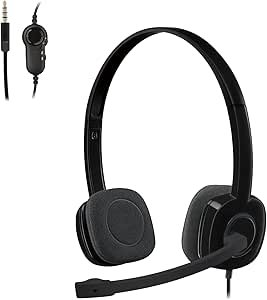
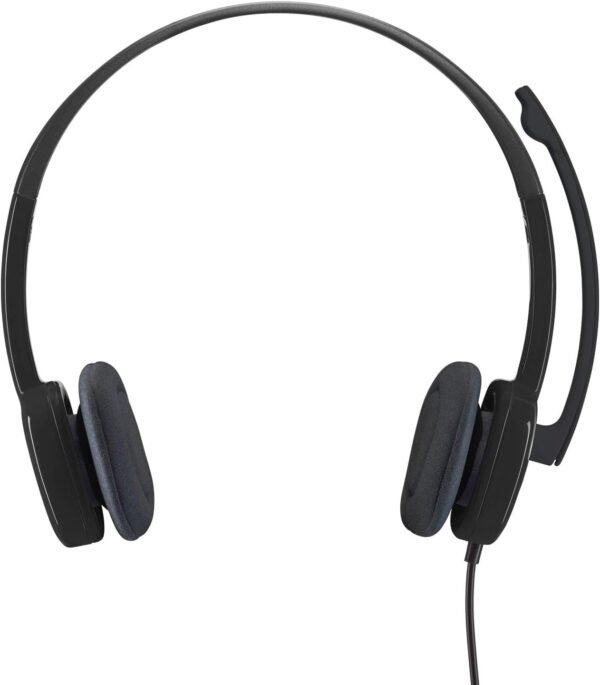
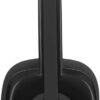
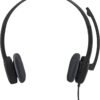
The Logitech H151 is a basic wired stereo headset with a 3.5 mm plug, a rotating boom microphone and inline volume and mute controls. It is the sort of headset bought for a call center, a school computer lab or a spare drawer, and Logitech’s own description is appropriately modest: a simple, versatile headset with stereo sound, a noise canceling microphone, an adjustable headband and inline audio controls.
One thing readers should know up front: this site carries a second listing for the same Logitech H151 under a different marketplace entry, covered at this page. They are the same headset with different packaging and part numbers. Buyers comparing alternatives should also see the Jabra Evolve2 30 SE and the Poly Blackwire 3210.
The Frequency Range Tells The Story
The most informative specification on this listing is the frequency range: 100 Hz to 6,500 Hz. That is a narrow band, and it is worth explaining because it sets realistic expectations better than any marketing sentence.
Human hearing extends roughly from 20 Hz to 20,000 Hz, and music headphones normally quote something close to that. A range that stops at 6,500 Hz cuts off most of the upper harmonics that give cymbals, strings and vocal sibilance their character, and starting at 100 Hz means bass below that point is not reproduced at all. What remains is the band where speech intelligibility lives.
That is not a fault. It is a design choice for a headset intended for calls, conferencing and voice chat, where narrowing the response reduces cost and can actually improve clarity by keeping energy out of frequencies that only add noise. But it does mean this is not a music headset, and anyone buying it for anything other than voice will be disappointed. Buyers who want music capability should look at the wider computer headsets category.
Microphone, Controls And Fit
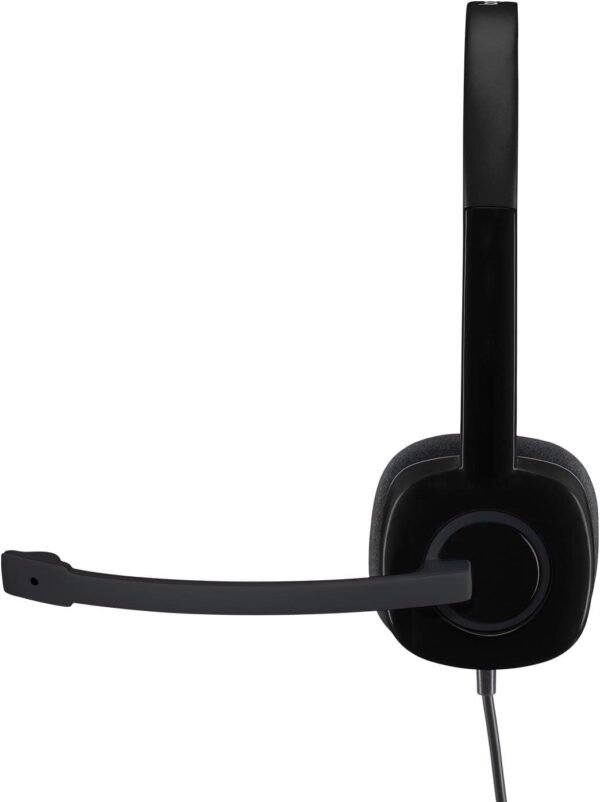
The microphone is described as noise canceling and rotating. Rotation matters more than it sounds: it lets the boom be positioned on either side of the head, which suits both left and right handed desk layouts and lets the microphone be swung up out of the way when not in use.
Noise canceling on a microphone at this level means directional pickup and basic filtering rather than any active processing, and Logitech publishes no figure for how much noise it removes. Inline controls handle volume and mute on the cable, which is the fastest way to mute during a call and requires no software.
The headband is adjustable and the earpiece shape is listed as over ear. Total weight is 8.1 ounces, which is light and appropriate for a headset worn through a shift. There is no active noise cancellation for the listener, and none is claimed.
Packaging And What Comes With It
The product title states bulk packaging, which means the headset arrives in plain protective packaging rather than a retail box. Bulk packaging is standard for volume purchases and typically costs less than the boxed version of the same product. Buyers expecting a gift ready presentation should note it.
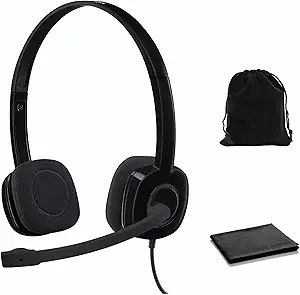
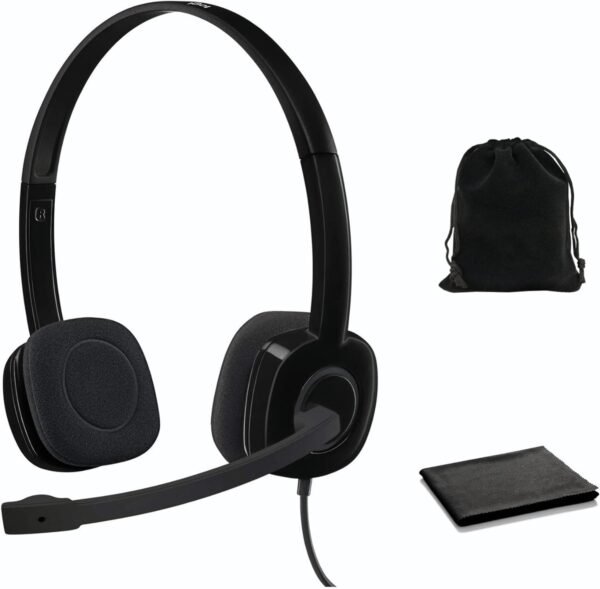
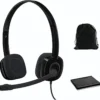
The included components are the headset itself, a storage pouch and a cleaning cloth. A pouch is a genuinely useful inclusion on a headset likely to be carried between home and office, and it is more than most headsets at this level provide.
The connection is a single 3.5 mm audio jack. That is worth understanding precisely: a single plug usually carries both headphone audio and microphone signal on one connector, which works directly with a laptop, a phone or a tablet. A desktop computer with separate microphone and headphone sockets may need a splitter adapter, which is not included.
Highlights
- Analog 3.5 mm connection requiring no drivers or software.
- Rotating noise canceling boom microphone.
- Inline volume and mute controls on the cable.
- Adjustable headband with over ear cups.
- Light at 8.1 ounces.
- Storage pouch and cleaning cloth included.
- Listed frequency range of 100 Hz to 6,500 Hz.
Things To Consider
The customer feedback is poor and thinly sampled: 3.2 stars across 10 ratings. Ten ratings cannot support a conclusion, but a 3.2 average is low enough that buyers should read every one of those reviews before purchasing rather than relying on the average.
The listing itself is minimal. The feature bullets array is completely empty, so the entire product description is two sentences. There is no impedance figure, no microphone sensitivity, no cable length, no driver size and no warranty term. Several specification fields are also wrong: Cable Feature reads Retractable, which Logitech does not claim anywhere; Control Method reads Touch on a headset with physical inline buttons; and Compatible Devices reads Desktops only, on an analog headset that works with almost anything having a 3.5 mm socket.
The practical limitations follow from what this is. There is no wireless option, no active noise cancellation, no software equalizer and no platform certification for Microsoft Teams or Zoom, which matters for businesses that require certified devices. The narrow frequency response rules out music. And a single combined jack may need an adapter on a desktop.
Against all that, the value proposition is straightforward: a wired headset with a mute button that works everywhere, costs little, and has nothing to charge, pair or update. For many buyers that is exactly the requirement. Readers wanting a speakerphone instead can look at options such as the Jabra Speak2 55.
Who It Suits
The H151 suits a home office, a school lab, a shared workstation or a spare desk drawer, where the requirement is clear voice on calls, an easy mute, and a device that plugs into anything. It is also a sensible bulk purchase for an organization equipping many desks cheaply, which is what the packaging suggests it was made for.
It is the wrong headset for music, for gaming where positional audio matters, for anyone needing active noise cancellation in a loud office, and for businesses that require certified conferencing devices. Buyers should also weigh the low customer rating carefully given how few ratings there are.