
Description
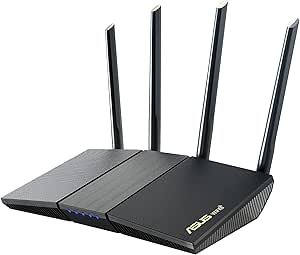
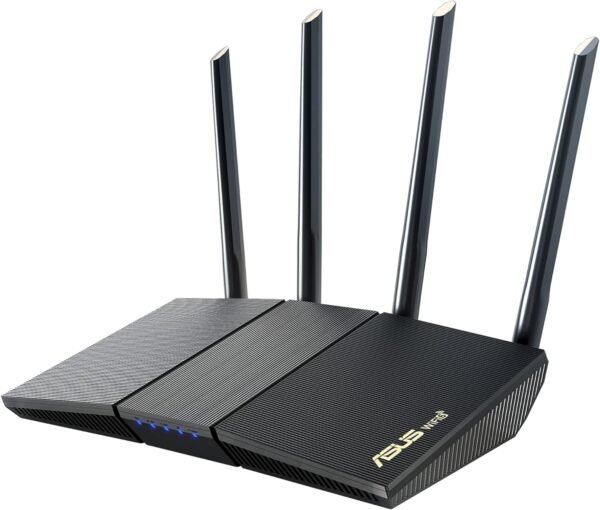
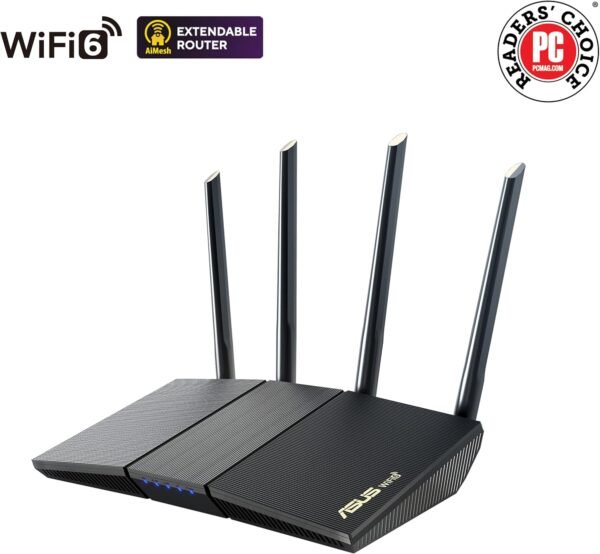
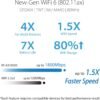
The ASUS RT-AX1800S is a dual band Wi-Fi 6 router aimed at ordinary home networks rather than at enthusiasts. ASUS describes it as a 2×2 dual band design with 80 MHz channel bandwidth and 1024-QAM modulation, supporting both MU-MIMO and OFDMA. It carries four external antennas, a dual core processor and five gigabit Ethernet ports, and it works with the AiMesh system so it can be expanded later.
Buyers comparing home networking should note what class this is. It is a mainstream Wi-Fi 6 router, not a gaming or multi gigabit unit. Those wanting a more capable platform should look at the Ubiquiti Dream Machine Special Edition, and anyone needing outdoor coverage should consider adding an access point such as the TP-Link EAP225-Outdoor.
Wi-Fi 6 And What The Features Do
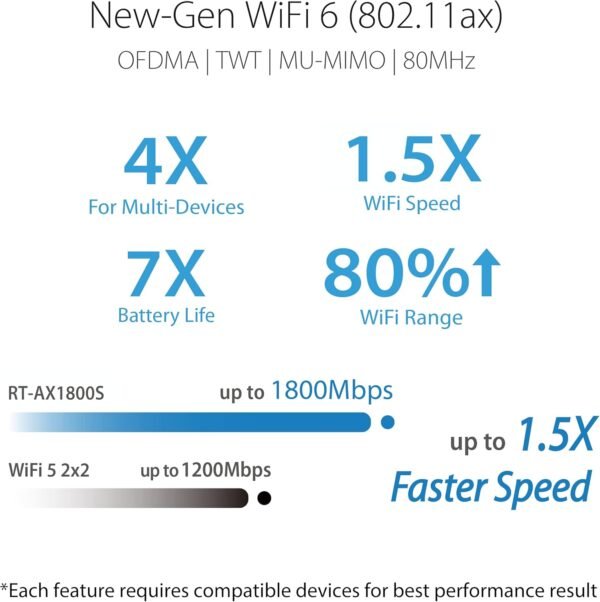
The AX1800 designation is the combined theoretical throughput across both bands, which is how the whole industry labels these products. No single device will see 1800 Mbps. A 2×2 configuration means two spatial streams, which is what most phones and laptops support, so the router matches typical client hardware rather than exceeding it.
Two Wi-Fi 6 features are worth understanding because they are the actual reason to buy this generation. OFDMA divides a channel into smaller resource units so the router can serve several devices within a single transmission instead of one after another, which reduces latency on busy networks with many small devices. MU-MIMO allows simultaneous transmission to multiple clients using separate spatial streams. Together they matter far more in a house with twenty connected devices than raw speed does.
1024-QAM packs more bits into each transmission, which increases throughput when signal quality is high, and 80 MHz channel bandwidth is the standard width for this class on the 5 GHz band. ASUS includes its own disclaimer that actual throughput and coverage vary with network traffic, building materials and network overhead, which is an honest and legally sensible caveat.
Ports, Processor And Power
The wired side is where buyers should pay attention. There are five gigabit ports: one gigabit WAN and four gigabit LAN. ASUS describes them as ten times faster than 100-Base T Ethernet, which is true and also a comparison against a standard that has been obsolete for a long time.
The practical point is that there is no 2.5 gigabit port anywhere on this router. Anyone on a cable or fiber plan faster than one gigabit will be capped at gigabit by this WAN port regardless of what the modem supports. That is directly relevant to buyers pairing a router with a multi gigabit modem such as the Hitron CODA56, which explicitly requires a 2.5 gigabit router port to exceed one gigabit.
The processor is described as dual core with 4 VPE, and four external antennas are fitted. Power input is 110 to 240 volts at 50 to 60 Hz with a 12 volt DC output rated at a maximum of 1.5 amps. The unit weighs 13.1 ounces and measures 9.06 by 5.28 by 2.2 inches, so it is light and compact for a four antenna router.
Security, Parental Controls And AiMesh
AiProtection Classic is included, powered by Trend Micro, and ASUS states it is subscription free. That is a meaningful distinction: several competing manufacturers charge annually for equivalent network protection features, so a router that includes them for the life of the device has a lower total cost. AiProtection Classic covers malicious site blocking and infected device detection.
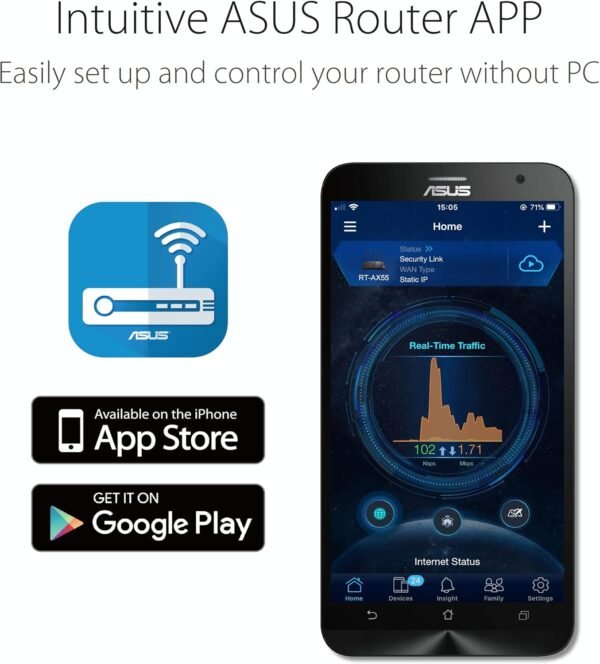
ASUS Instant Guard is also included, described as a one click secure VPN for use when away from home. This routes traffic back through the home router, which is useful on public wireless networks. Parental controls are listed as a feature, and the router is described as extendable.
AiMesh compatibility is the most valuable long term feature. It allows this router to be combined with other AiMesh capable ASUS routers, including different models, to form a single mesh network with one name. That means a coverage problem can be solved later by adding a second ASUS router rather than replacing the whole system, and older ASUS hardware can often be reused as a node.
Highlights
- 2×2 dual band Wi-Fi 6 with 80 MHz bandwidth and 1024-QAM.
- MU-MIMO and OFDMA support.
- One gigabit WAN port and four gigabit LAN ports.
- Four external antennas with a dual core processor.
- AiProtection Classic from Trend Micro, stated as subscription free.
- ASUS Instant Guard one click VPN and parental controls.
- AiMesh compatible for later mesh expansion.
- Light at 13.1 ounces.
Things To Consider
The gigabit WAN port is the limitation that will matter most over the life of this router. Internet plans have moved past one gigabit in many areas, and this router cannot pass more than that from the modem. Buyers on a gigabit or slower plan lose nothing. Buyers on a faster plan, or who expect to upgrade within a few years, should choose a router with a 2.5 gigabit WAN port.
The listing also omits several things. There is no processor speed, no memory or flash capacity, no antenna gain figure, no statement of whether the antennas are removable, no USB port mentioned for a shared drive or printer, and no coverage area estimate. The Wireless Type field lists 802.11a, ac, ax, g and n, which is a compatibility list rather than a specification.
2×2 is also the entry level stream configuration. A 4×4 router serves more simultaneous high bandwidth clients, though it costs more and only helps if the client devices support it, which most phones do not.
Customer feedback is solid and well sampled at 4.4 stars across 2,192 ratings, on a router first available in November 2021. That is a good sample for a networking product and the strongest evidence on the listing. Readers can compare other networking hardware in the routers category and the modems category.
Who It Suits
The RT-AX1800S suits a household on a gigabit or slower internet plan that wants Wi-Fi 6 for a large number of connected devices, values built in security without a subscription, and wants the option to expand into a mesh network later using AiMesh. For an apartment or a small to medium house it is a sensible mainstream choice.
It is the wrong router for anyone on a multi gigabit internet plan, for households needing wired multi gigabit links between machines, for users who want a USB port for network storage, and for large or difficult properties where a mesh system bought as a set would be the better starting point.