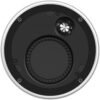
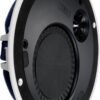
Description
What The KEF Ci160ER Actually Is
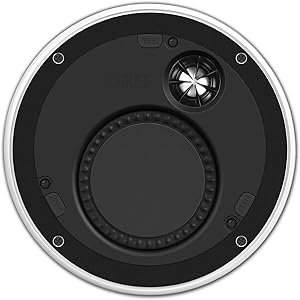
Before anything else, this product needs correctly identifying, because the category it sits in is misleading. The KEF Ci160ER is an architectural loudspeaker from KEF’s Ci-E series, designed to be installed into a ceiling or a wall. It is not a computer speaker, it has no amplifier, no USB connection, no Bluetooth and no volume control. It is a passive drive unit assembly that connects to speaker cable and requires an amplifier or receiver to drive it.
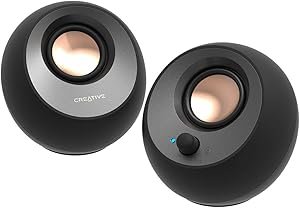
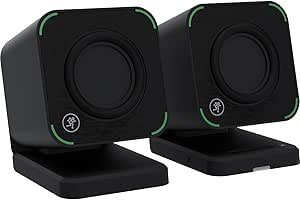
That distinction is the single most important thing on this page. Anyone looking for speakers to plug into a computer should be looking at powered desktop units such as the Creative Pebble V3 or the Mackie CR2-X Cube monitors, both of which contain their own amplification. The Ci160ER belongs to a whole house or home cinema installation.
The Uni-Q Driver
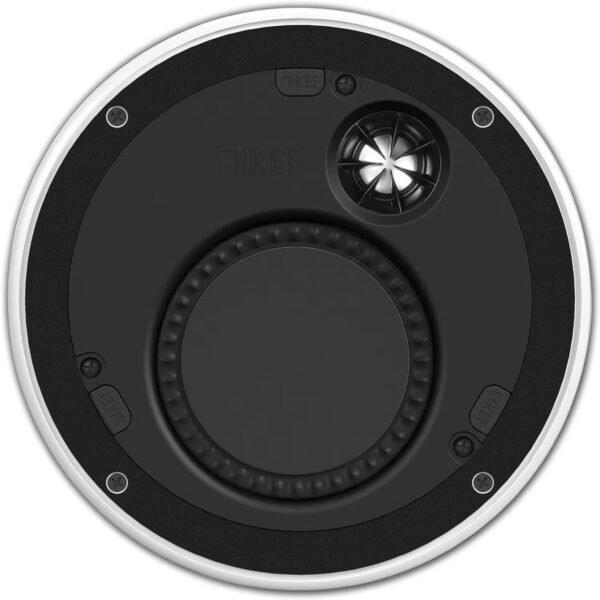
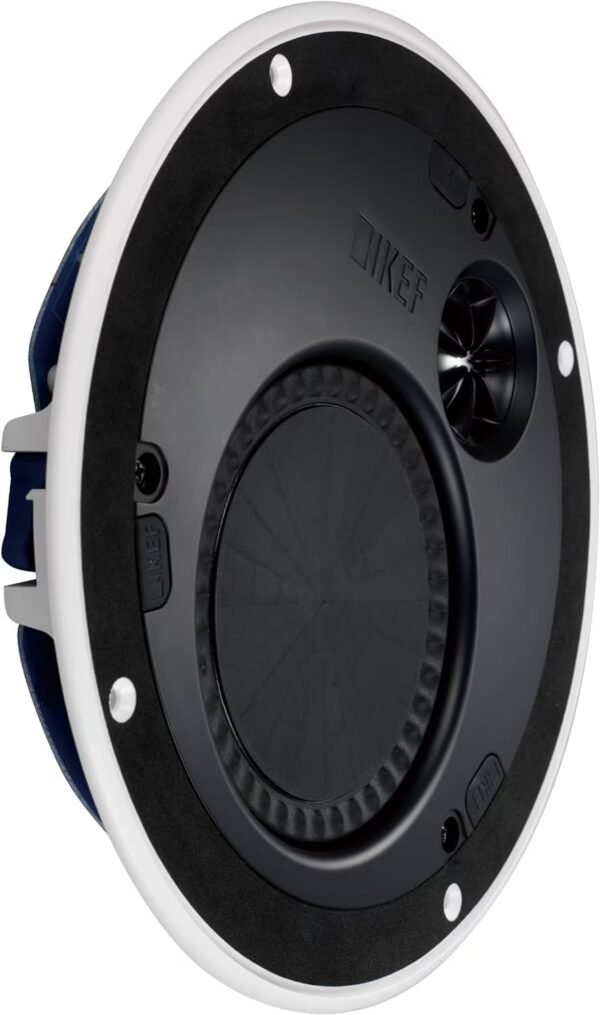
KEF’s Uni-Q arrangement is the reason the Ci-E series exists, and it is worth explaining rather than repeating. In a conventional speaker the tweeter and the mid range driver sit apart on the baffle, which means the two sound sources arrive from slightly different points and the response changes as the listener moves. Uni-Q places the tweeter at the acoustic center of the mid range cone so that the two behave as a single point source.
KEF states that this allows a listener to sit anywhere in the room and still get consistent clarity, rather than being confined to a narrow sweet spot. For a ceiling speaker that matters more than it does for a bookshelf speaker, because a ceiling installation puts the drivers above and behind people who are moving around, and off axis behavior is most of what anyone actually hears.
The Numbers
KEF publishes a full specification, which is unusual in this catalog. Nominal impedance is 8 ohms. Sensitivity is 89 dB measured at 2.83 volts at 1 meter. Frequency response is 52 Hz to 20 kHz within plus or minus 6 dB, measured open backed. The crossover frequency is 2.8 kHz. Drive units are a 160mm low frequency unit, which is 6.5 inches, and a 16mm high frequency unit at 0.6 inches. Recommended amplifier power is 10 to 100W.
The open backed qualification on the frequency response is worth noticing. An in ceiling speaker with no enclosure uses the cavity behind it as its back volume, so the bass response depends on the space above the ceiling. That is why the 52 Hz figure is a guide rather than a promise, and why installations that care about low frequencies add a back box or a subwoofer.
Installation Dimensions
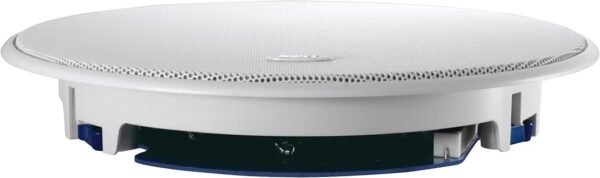
The physical figures are the ones that decide whether the speaker fits. External diameter is 234.6mm, which is 9.24 inches, and depth is 88.7mm or 3.49 inches. The cut out diameter required is 196mm or 7.71 inches, and the maximum ceiling thickness the mounting system accommodates is 36mm or 1.42 inches. Anyone planning an installation needs all four numbers before cutting anything.
KEF also describes an Ultra Thin Bezel design giving the thinnest possible visible rim, with both the bezel and the grille able to be painted to match the room. Weather resistant construction is specified: the grilles are coated by a proprietary process, terminations and finish materials are moisture resistant, and the plastics are UV protected, which KEF states allows use in bathrooms and kitchens.
Highlights
- KEF Uni-Q coincident driver arrangement.
- 160mm low frequency and 16mm high frequency units.
- Sensitivity of 89 dB at 2.83 volts and 1 meter.
- 8 ohm nominal impedance.
- Crossover at 2.8 kHz.
- Recommended amplifier power of 10 to 100W.
- Ultra Thin Bezel with a paintable bezel and grille.
- Weather resistant construction for bathrooms and kitchens.
- Cut out diameter of 196mm and maximum ceiling thickness of 36mm.
Things To Consider
The specification table on this listing describes a completely different kind of product. It lists Connectivity Protocol as Bluetooth, Control Method as push button and remote, and Controller Type as Button, on a passive speaker with no electronics of any kind. It also lists Includes MP3 Player as No, which is not a meaningful field here. Product dimensions are given as 10.85 by 10.85 by 11.59 inches, which does not match the 9.24 inch diameter and 3.49 inch depth KEF states in its own text, and the product title is simply Ci160ER with no description of what it is. The listing also does not state whether the speaker is sold singly or as a pair, which is a basic question for any installation.
- This is a passive speaker. An amplifier or receiver is required and is not included.
- No Bluetooth, no USB and no volume control despite what the specification table says.
- Whether the price covers one speaker or a pair is not stated.
- Installation requires cutting a 196mm hole in a ceiling or wall.
- Ceiling thickness above 36mm is outside the stated mounting range.
- Bass response depends on the cavity behind the speaker, since it is open backed.
- Speaker cable must be run to each location, which usually means work before the ceiling is finished.
- Weather resistant is not the same as waterproof, and no ingress protection rating is given.
Who Should Buy It And Who Should Not
The Ci160ER suits someone installing distributed audio in a house: kitchen and bathroom ceilings, a hallway, a home cinema surround position or a multi room system driven by a central amplifier. The Uni-Q driver is genuinely well suited to ceiling placement, the published specification is complete enough to design an installation around, and the paintable bezel is what makes these disappear into a room. It is a professional installation product bought by people who already know they need one.
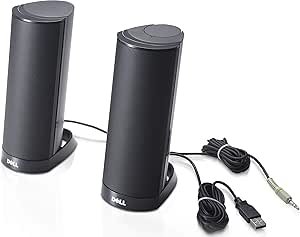
It is the wrong purchase for a computer desk, which is where this catalog files it, and the wrong purchase for anyone without an amplifier and speaker cable already planned. Desk users should look at powered speakers in the computer speakers category, including compact options such as the Dell AX210. Anyone who wants good sound without any installation should consider a portable speaker such as the Bose SoundLink Revolve II, or a speakerphone like the Jabra Speak2 55 if calls are the main use.